

As the US midterm election results demonstrate, the political pendulum keeps on swinging, from authoritarian to liberal, nationalist to progressive, reactionary to reformist, elitist to socialist.
Globally, a broader pattern is emerging. Across Serbia, Nepal, Bangladesh, Indonesia, India, Morocco, Peru, Sri Lanka, Thailand, France and other parts of Europe, youth-led movements known as the Gen-Z Protests have been triggered by different local grievances: nepotism, oligarchy, systemic corruption, austerity, unemployment, collapsing public services, electoral manipulation, censorship, and police violence.
Beneath those various grievances lies a common ground: a growing disenchantment with the entire political apparatus and the backsliding of democratic institutions and the ethical civic principles by which a fair and prosperous society can thrive.
The new Gen-Z generation no longer trusts inherited institutions have the capacity nor the will to reform themselves.
We have examined the basic flaws in the way democracy is currently being offered. Including precise proposals for creating a real democracy. Democracy inevitably fails to deliver on its overarching promise of equality and representation. At the root of the dysfunction is the rise of the political class that is increasingly disconnected from the people who elected them and that prioritizes party affiliation, ideology, loyalty to the existing power structures, rather than real participation.
Political parties are nothing more than manipulation machines designed to keep those at the top in power. De Tocqueville was the first to warn of “the tyranny of the majority” and to stress the importance of the decentralization of power and of independent institutions in a society based on civil values.
Today, Serbia is offering a concrete example of a generational shift that presages a future where political parties and affiliations – the entrenchment of power sustained by the divisive hysteria of party politics – is being challenged.
The scope of the disillusionment is such that politics itself is being questioned and has become the target.
In a piece titled Serbia’s Experiment: Combining Democracy & Meritocracy, author Natan Gardels describes the movement as “emblematic of a rotten regime that became the spark for systemic change.” The article explains how, “wise beyond their years, the students sought political slots not for themselves, but for an array of learned citizens – from cardiologists to chemists and astrophysicists – they considered more experienced and better capable of governing. Nomination rules strictly prohibited career politicians.”
Could the Serbian example, and to a lesser degree, the Cockroach movement in India, signal the beginning of the end of collective action? Collective action has been the bedrock of resistance to the status quo for centuries, and particularly over the last two-hundred years. This change could signal a profound change in the basic approach to anti-establishment rebellions. Both the Serbian students and the Cockroach movement send a clear message that blind faith in established collective identities and hierarchies of control and domination is no longer an option. No longer an option for the status quo, or the rebellion!
What is at stake is our future.
A “Student List”, a satirical mock political party (CJP), an assembly, or a movement may be the necessary vehicles in the transition from collective action to individual rebellion and the starting point for true revolutionary change.
It is after all the only model that has not yet been tried and whose successful outcome would indeed be revolutionary.
The deeper force of change does not come from the reactionary mob that relegates all responsibility for its actions to the unconsciousness of the collective.
The deeper force of change comes when individuals refuse to be held captive to the old political machinery.
What we are witnessing is a new movement that differs from traditional rebellions in several ways.
The protests are no longer organized around a single grand ideology, political affiliation or religious revival, but a call for dignity, competence, fairness and accountability. The digital tools available to Gen-Z are making it possible for individual voices to be expressed and disseminated horizontally, and are therefore harder to control or censure.
The youth’s discontent may be driven by economic precarity in the face of entrenched corruption and nepotism among the ruling class elites, but whichever the triggering mechanism may be, the question that emerges from this rising restlessness becomes:
What if the next revolution is not the overwhelming force of collective power, but the rise of the individual voice, the inner voice of sanity and wisdom that resides in all of us, hidden, crushed by a system that manufacture divisions, false collective identities, which sows fear and thrives on the dependency of the masses?
Could it be just a coincidence that the original uprising of the individual over the dictates of the entrenched elite happened, of all places, in India twenty-five centuries ago?
Who was Buddha or Mahavira at their roots but disenchanted individual rebels who were rejecting, challenging the established Brahmin order, its inherited status and claims to divine authority? Under the garb of religion, this divine order had all the hallmarks of today’s political institutions, a system of control whose legitimacy was unquestionable.
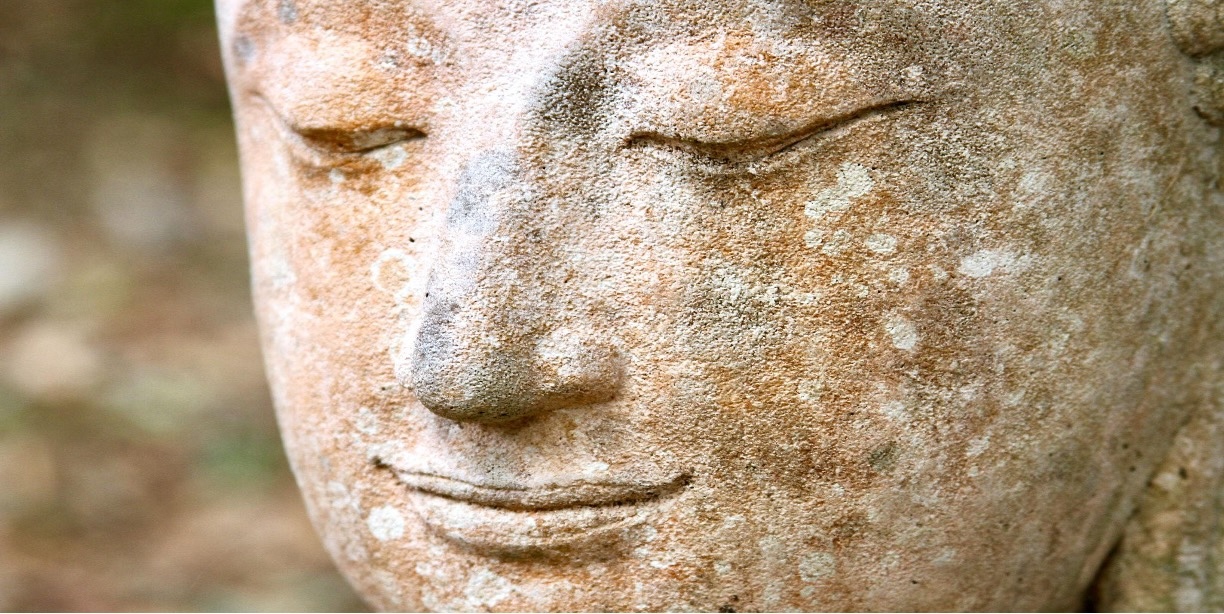
Buddha’s message is in essence the triumph of individual freedom and agency over the tyranny of the collective.
Closer to home, one could not find a better manifestation and embodiment of the perfect modern rebel but in Osho’s vision of the rebel:
“The rebel is a spiritual phenomenon. His approach is absolutely individual.
“His vision is that if we want to change the society, we have to change the individual.
“Society in itself does not exist, it is only a word like crowd; if you go to find it, you will not find it anywhere. Whenever you encounter someone, you encounter the individual. Society is only a collective name, just a name, not a reality – with no substance. The individual has a soul, and a possibility of evolution, of change, of transformation. Hence, the difference is tremendous.
“The rebel is the very essence of religion. He brings into the world a change of consciousness, and if the consciousness changes, then the structure of the society is bound to follow it. But vice versa is not right – and it has been proved by all the revolutions because they have all failed.”1
Today’s youth is coming closer to the understanding “that if we want to change the society, we have to change the individual.” The Gen-Z generation no longer believes that established collective vehicles – political parties, ideological movements, legacy media, bureaucratic institutions, and even formal civil society organizations – can deliver genuine change and renewal.
Collective reactionary forces only end up reproducing the same patterns they oppose.
The same hierarchies, nepotism, conformity, branding, moral posturing, the corruptive power of big money and lobbyists, and dependency on the media they continue to control.
Osho:
“No revolution has yet succeeded in changing man; yet it seems man is not aware of the fact and he still goes on thinking in terms of revolution, of changing the society, of changing the government, of changing the bureaucracy, of changing laws, political systems. Feudalism, capitalism, communism, socialism, fascism – they are all in their own way revolutionary. They all have failed, and failed utterly because man has remained the same.”1
As such, collective identity has become suspect and the daily exposure to the absurd insanity of political shenanigans around the world is pushing us to open ourselves to new perspectives, new possibilities that have never been tried in the past.
With so many of the worlds’ current institutions approaching potential catastrophic tipping points, if effective change is going to happen, it needs to happen now.
When the nature of collective identification and mob psychology starts to be exposed, questioned through the lens of the intelligence of the individual, the ancient tradition of the rebel takes on a new relevance and a new urgency.
Osho:
“A Gautam Buddha, a Zarathustra, a Jesus – these people are rebels. Their trust is in the individual. They have not succeeded either, but their failure is totally different than the failure of the revolutionary. Revolutionaries have tried their methodology in many countries, in many ways, and have failed. But a Gautam Buddha has not succeeded because he has not been tried. A Jesus has not succeeded because Jews crucified him and Christians buried him. He has not been tried, he has not been given a chance.
“The rebel is still an un-experimented dimension.”1
If history is any guide, what happened at the time is in itself illuminating: Buddhism disappeared from India but spread far and wide and retained its essence in the Zen tradition, through which has flowered the ultimate expression of individual consciousness and enlightenment.
The fragmentation of the uprisings across much of the globe only shows a growing awareness spreading among the youth of what the mystics have always known:
True freedom is only found when the individual becomes disidentified, immune to the collective mechanisms of control through which collective party politics operate.
The withdrawal is no longer expressed through the monastic escape of the renunciate or the apathy, the resignation of the disheartened and the defeatist.
It is an affirmation of the human potential, what Osho calls Zorba the Buddha.
“Zorba the Buddha is the new man, is the rebel. His rebellion consists of destroying the schizophrenia of man, destroying the dividedness – destroying spirituality as against materialism, and destroying materialism as against spirituality. It is a manifesto that body and soul are together, that existence is full of spirituality, that even mountains are alive, that even trees are sensitive, that the whole of existence is both – or perhaps just one energy expressing itself in two ways, as matter and as consciousness.”2
For lasting change to happen, the most radical act is no longer joining a mass movement, but becoming a unique individual whose identity is no longer at the mercy of power structures, but forged on a new foundation where human qualities of compassion and collaboration prevail.
True rebellion does not begin when the crowd becomes one. It begins when the individual can no longer be made into a crowd.
Osho:
“The question is not how this rebellion can catch like a wildfire.
“The question is for you to catch the flame, for you to become a rebel.
“Don’t be worried about how the world should catch the rebellious spirit. You are the world; every individual is the world.”2
END
1– Osho, The Rebel, Chapter #01 – The Meaning of Rebelliousness: A Discontinuity with the Past
2– Osho, The Rebel, CHAPTER #08 – Zorba the Buddha – Man of the Future


Leave a Reply