

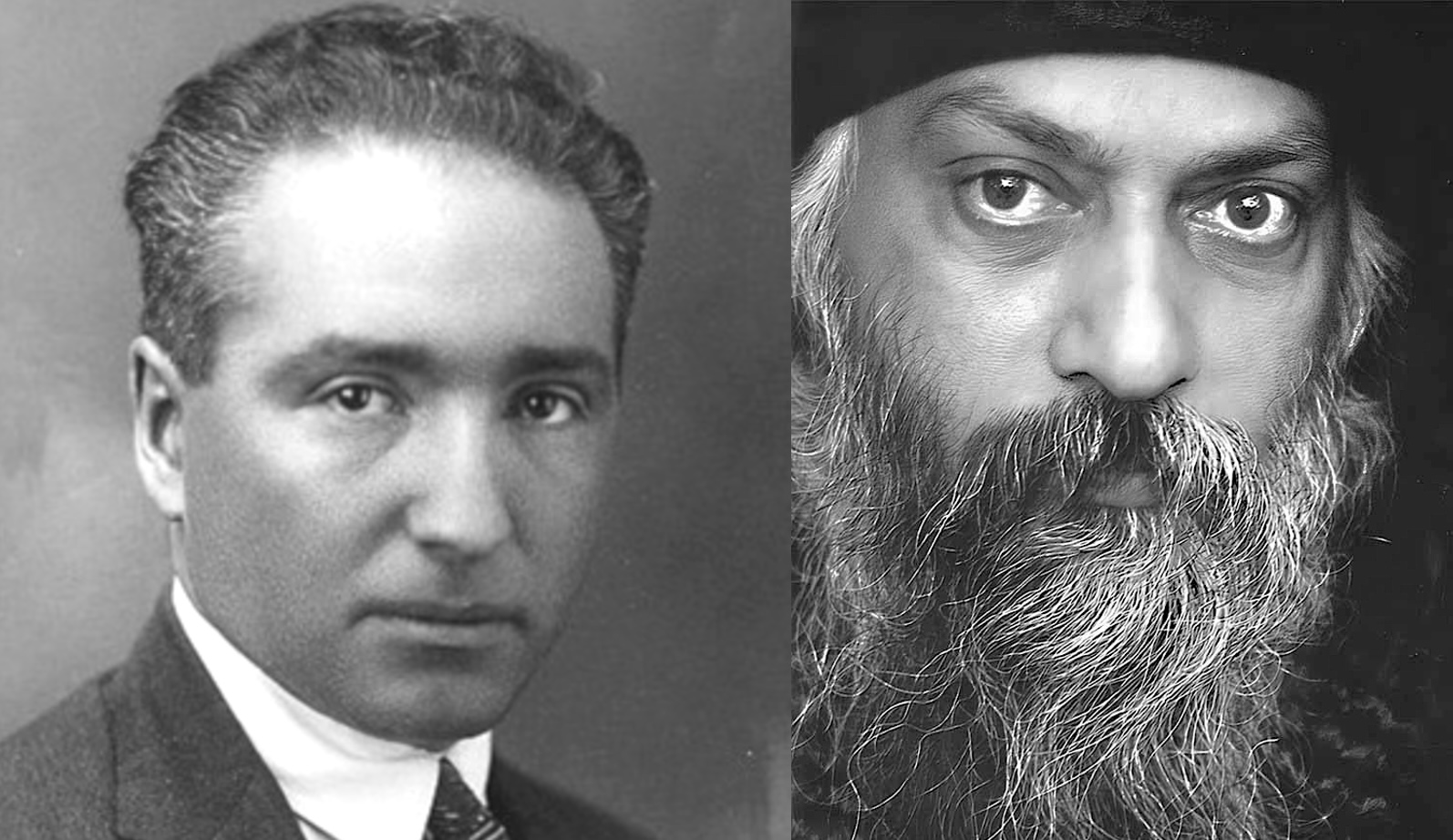
Long before Michel Foucault formulated the concept of biopolitics, Wilhelm Reich had already identified—in the first half of the twentieth century – the precise point where power inscribes itself into life: the desiring body.
In The Authoritarian Family as an Apparatus of Education (1936), Reich states something intolerable for any established order:
Childhood sexual repression is not a secondary effect of culture, but the central mechanism through which political obedience is produced.
Not as metaphor, but as structure. The nuclear family is therefore not a moral refuge, but a factory for submissive character.
With this thesis, Reich went further than the later Foucauldian analytics. Foucault would describe mechanisms of power, normalization, and the production of subjectivity; Reich, by contrast, pointed to the libidinal nucleus where this capture occurs. Where Foucault speaks of discourse and knowledge-power, Reich speaks of body, pleasure, and vital energy. One might say:
Foucault is Reich without libido—a translation rendered acceptable, academic, teachable.
Reich, instead, remained explosive.
His diagnosis was devastating:
Authoritarianism is not imposed solely by force; it is unconsciously desired.
The child learns to repress before learning to think. Political obedience is founded upon sexual guilt. This is why Reich articulated Marxism, psychoanalysis, and sexual liberation without conceptual anesthesia. He touched what could not be touched: real desire, not its discursive representation. And this made him dangerous.
The story of his neutralization follows a classic pattern of modern power: when a critique cannot be refuted, it is medicalized.
Reich was ridiculed, judicialized, isolated, and ultimately imprisoned in the United States.
His books were burned by state order. His death in prison was later rewritten under the label of “mad scientist.” He was not defeated in the realm of ideas; he was converted into a pathological case. Madness functioned as a retrospective political device.
But Reich was not an isolated case. Decades later, another name would occupy the same structural position in the history of libidinal dissent: Osho.
The Osho Operation: From Communal Experiment to Media Caricature
If Reich was neutralized through scientific-judicial persecution and psychiatric labeling, Osho was neutralized through a more contemporary device: media scandal. The objective, however, was identical—to deactivate a critique that did not remain at the level of discourse but began to incarnate itself in concrete forms of life.
During the 1970s and 1980s, Osho did not merely propose a philosophy of inner liberation. He built experimental communities where new forms of relationship, sexuality, work, and non-hierarchical organization were explored. This is the crucial point: the system can tolerate discourses on freedom, but it cannot tolerate freedom materializing in alternative social structures.
When desire organizes itself collectively, it ceases to be harmless.
The Rajneeshpuram commune in Oregon was, in this sense, a direct provocation to the foundational American imaginary: a community that was non-religious in the traditional sense, non-familial in structure, non-productivist in ethic, and non-puritanical in its conception of the body. It embodied a way of life in which pleasure was not subordinated to guilt or economic utility. That made it an intolerable anomaly.
Osho:
“When you bring up the subject of sex, immediately you annoy all the people who are in power because nobody who is in power wants people to live to their optimum sexually. They want you to live your minimum sexually because at the minimum you can be enslaved. At the maximum, you are so powerful, you are so intelligent – you are a rock and you cannot be destroyed. Whoever tries to destroy you will be destroyed.”1
The neutralization process began through the most efficient flank of late modernity: the spectacularization of conflict. The media did not debate Osho’s ideas; they constructed the narrative of a dangerous cult, portrayed him as a narcissistic leader, accused him of mass manipulation, extravagance and delirium.
Philosophical complexity was reduced to images of red robes, Rolls Royces, and alarmist headlines.
The message was clear: one does not need to refute an experiment—one only needs to ridicule it.
Simultaneously, the juridical machinery was activated. Accusations, immigration proceedings, federal investigations, and local political pressure tightened the net. Finally, Osho was deported from the United States without any public trial of his ideas.
There was no doctrinal condemnation; there was administrative expulsion—a modern, clean, silent form of symbolic elimination.
The result was double. Outwardly, public opinion became convinced it had witnessed the collapse of an eccentric sect. Inwardly, the communal experiment was dismantled. The libidinal critique of puritanism, of the traditional family, and of disciplined labor was deactivated without the need for explicit censorship or a rational debate on the merits of his vision for society. It was enough to saturate it with noise.
Here lies an important difference from Reich. In the 1930s and 1950s, power needed to declare the dissident insane or dangerous. By the 1980s, power had learned something more effective: to turn him into entertainment.
Osho was not only persecuted; he was converted into spectacle. And spectacle is the most advanced form of neutralization.
The political message was unmistakable: you may speak of consciousness, spirituality, or free love—but if you attempt to build communities where these ideas reorganize the social body, you will be absorbed by the media-juridical apparatus until your proposal is reduced to an extravagant anecdote.
As with Reich, the core of the critique was never refuted. No one seriously debated whether repression of desire produces conformity and obedience. No one debated whether the traditional family is a political apparatus. No one debated whether another form of coexistence was possible. Instead, the figure carrying the message was simply delegitimized.
From Reich to Foucault: From Body to Discourse
The difference between Reich, Osho and Foucault explains why two were persecuted and the other institutionalized. Reich and Osho locate the origin of power in the body and libido. Foucault locates it in discourse and dispositifs. The two approaches do not contradict each other; but one preserves the flesh of the problem while the other offers its conceptual skeleton. Foucault can be taught in universities; Reich and Osho could not be permitted in social life.
One could say: Foucault is Reich and Osho translated into the acceptable language of power. Reich and Osho, by contrast, spoke too directly about pleasure, orgasm, vital energy, and bodily blockage. They touched the material base of control.
This is why Reich and Osho were more dangerous than Marx. Marx attacked the economy. Reich and Osho attacked character. They showed that the system does not survive only through external institutions but through domesticated bodies. Without liberation of desire, no real transformation is possible. This idea remains unbearable today.
The Contemporary Neutralization of Desire
The historical irony is brutal. Today the nuclear family is collapsing, birth rates are falling, and anxiety is on the rise. Not because Reich was wrong, but because repression no longer needs the family as its primary apparatus.
Control now operates in dopaminergic, algorithmic, and performative modes.
Desire is no longer prohibited; it is stimulated without depth, dispersed, administered.
Yet the logic remains the same: neutralize authentic desire, replace it with empty excitation and managed consumption. The body remains the central battlefield, only with more sophisticated technologies.
The Fate of the True Disruptor
Today Reich can be cited in academic papers. This is the final neutralization: turning him into the past. Yet his diagnosis remains intact. Repression of desire produces obedience. Political structure is sustained by blocked bodies. That is why his ending could not be dignified: systems do not grant honorable endings to those who expose them.
Reich and Osho were not persecuted for being wrong. They were persecuted for being right too early.
This is, historically, the fate of the true disruptor: not debate, not refutation, but deactivation.
Osho:
“A man of truth is bound to be condemned, because our whole lives are lived on consolations, which are lies. We are all under the opium that religions have been supplying to us. The moment a man comes out of this state of sleepiness, the whole crowd will be against him, because his behavior will change so totally from the crowd’s.
The crowd cannot tolerate anybody who behaves differently. The reason is a great fear that perhaps he may be right.
“And he looks right: his beauty is changed, his grace has changed, his words have an authority which they never had before. His silences are deep. He is surrounded by an aura of a new energy.
“This makes people very much afraid – afraid that ‘this man may be right; then we have missed our whole lives. This man somehow has to be destroyed.’ It is not for no reason that Socrates and Anagoras were poisoned and al-Hillaj Mansoor was crucified. Sarmad and Jesus…and there are hundreds of others who have been stoned to death or burned alive, and their only crime was that they had attained the truth.”2
END
Vikrant Sentis
1 – Osho, Sermons in Stone, Talk #7 – Love and Centering: One Phenomenon
2 – Osho, Rinzai, Master of the Irrational, Talk #2 – Empty Heart, Empty Mind
References
Debord, G. (1994). The Society of the Spectacle. Zone Books. (Original work published 1967)
Foucault, M. (1990). The History of Sexuality, Vol. 1: An Introduction. Vintage. (Original work published 1976)
Reich, W. (1970). The Function of the Orgasm. Noonday Press. (Original work published 1946)
Reich, W. (1975). The Sexual Revolution. Farrar, Straus and Giroux. (Original work published 1936)
Scull, A. (2015). Madness in Civilization: A Cultural History of Insanity. Thames & Hudson.
Urban, H. B. (2015). The Power of Tantra: Religion, Sexuality and the Politics of South Asian Studies. I.B. Tauris. (Contains analysis of Osho’s movement in sociological context.)
Marcuse, H. (1966). Eros and Civilization. Beacon Press. (For contextual linkage between libido and social theory.)


Leave a Reply